What Is Americana Music? A 2026 Guide to the Genre’s Roots and Revival
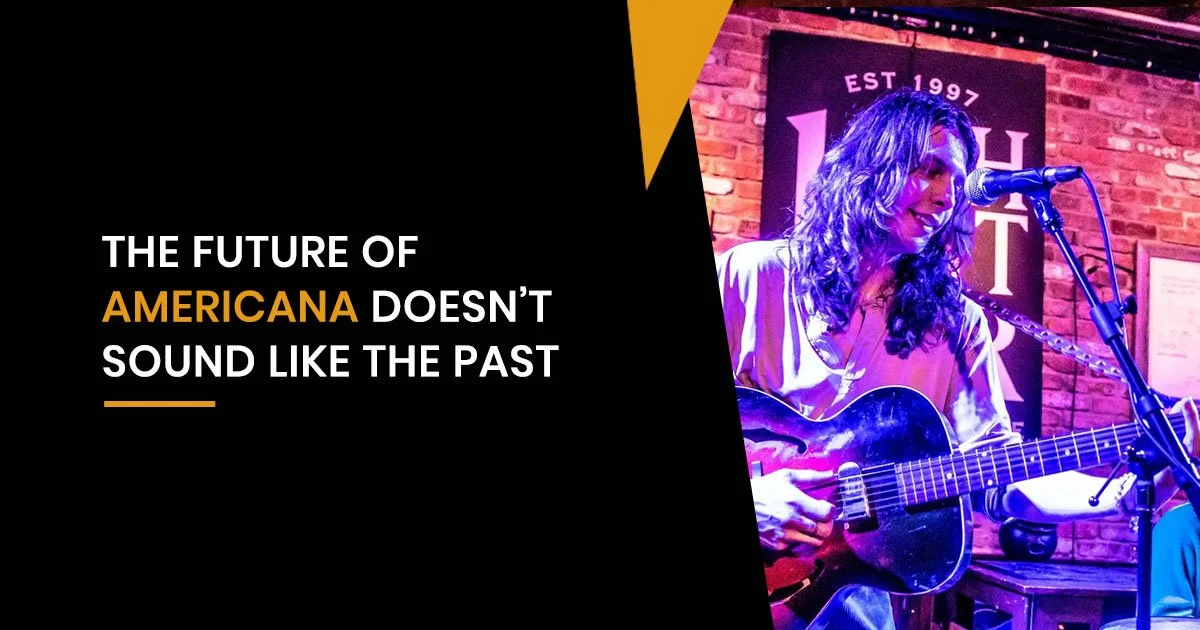
Table of Contents
- 1. What is Americana Music?
- 2. Roots and Influences of Americana
- 3. The Evolution and Revival of Americana
- 4. The Wonder Licks: Futuristic Americana from New York City
- 5. Americana vs. Other Genres
- 6. How to Explore Americana Music
- 7. FAQs about Americana Music
- 8. Conclusion
What is Americana Music?
Close your eyes for a moment.
Imagine a song that starts with a single acoustic guitar — unhurried, warm, a little worn at the edges like a favorite jacket.
Then a voice comes in. Not polished. Not Auto-Tuned. Just honest.
The kind of voice that sounds like it's been somewhere and has something to tell you about it.
By the time the fiddle enters and the full band kicks in, you're not just listening to a song anymore.
You're inside a feeling.
That's Americana. And chances are, you've already felt it — you just didn't have a name for it yet.
Americana is a broad, roots-based genre that blends country, folk, blues, rock, and soul into something that resists easy definition.
Think of it as a melting pot of American musical traditions — not a single sound, but a shared attitude toward music.
That attitude prizes authenticity over polish, storytelling over spectacle, and emotional truth over radio-ready perfection.
Acoustic instruments — guitar, banjo, fiddle, mandolin, pedal steel — are its natural language.
But what truly unites Americana is something harder to quantify: the sense that the person singing has lived what they're singing about.
As the Americana Music Association puts it, the genre is filled with "singers who can sing, players who can play, and writers who can write."
In a music landscape increasingly driven by algorithms and production trends, that's a radical proposition — and it's exactly why Americana keeps pulling people in.
But where did all of this come from — and how did it travel from Appalachian hollows and Mississippi Delta juke joints all the way to a New York City stage?
Roots and Influences of Americana
Americana didn't arrive fully formed.
It grew slowly, like a river fed by a hundred tributaries, each one carrying its own history and geography.
Traditional folk and ballads form the bedrock.
The songs passed down through Appalachian communities — some dating back to the British Isles, others born in the American experience of hardship, migration, and resilience — gave Americana its narrative spine.
Woody Guthrie didn't just write songs about dust bowl migrants; he documented a chapter of American life that official history ignored.
Pete Seeger didn't just play banjo; he used music as an act of democratic faith.
That conviction — that a song can carry truth that nothing else can — runs through everything Americana touches.
Early country and bluegrass contributed the instruments and the ache.
Hank Williams wrote songs that sounded like they came from somewhere beyond ordinary human experience — too raw to be performance, too precise to be accident.
Bill Monroe built bluegrass into a vehicle for technical virtuosity wrapped in emotional devastation.
The steel guitar, the fiddle, the upright bass — these weren't just sounds.
They were emotional technologies for expressing things that words alone couldn't reach.
Blues and gospel injected the soul.
Robert Johnson's guitar sounded like a conversation with something dangerous.
Blind Willie McTell could make a twelve-bar blues feel like a whole lifetime compressed into three minutes.
Gospel brought the collective — the call and response, the communal catharsis, the feeling of a room full of people breathing together in search of something transcendent.
All of that lives inside Americana.
Rock, R&B, and the countercultural collisions of the 1960s and 70s pushed everything into new territory.
Bob Dylan picked up an electric guitar and half the folk world called it betrayal. He called it evolution.
Gram Parsons called it "cosmic American music."
Emmylou Harris carried that torch further and longer.
By the time the industry needed a name for what was happening on the independent, rootsy edge of American music, one word kept surfacing:
Americana.
The Evolution and Revival of Americana
For a long time, Americana existed in the margins.
It lived in small clubs, independent record stores, late-night radio programs, and devoted communities that valued creative integrity over commercial success.
Then something shifted.
By the early 2000s, Americana had enough critical mass to earn its own Grammy category — Best Americana Album.
AmericanaFest in Nashville became the genre's annual gathering point.
Indie and rock artists began gravitating toward Americana sounds not as a retro exercise but as a genuine creative choice.
Pedal steel guitar started appearing on indie records.
Country-influenced harmonies showed up in rock contexts.
The lines between genres didn't disappear — they just became more interesting.
Home recording technology and digital distribution changed the economics entirely.
Artists could now build fanbases directly.
This rewarded exactly what Americana had always valued: craft, authenticity, and the long game.
Perhaps most fascinatingly, Americana has gone global.
In 2024, the first Americana festival in France was held in rural Vancé.
The instruments are American. The feeling is universal.
The Wonder Licks: Futuristic Americana from New York City
When lightning strikes mud, it creates fulgurite.
That's the image The Wonder Licks use to describe their own sound.
We are a New York City-based Americana band — and that detail matters.
Americana born in Nashville carries tradition.
Americana born in New York carries creative friction.
The result is what the band calls "futuristic Americana."
Start with "Beatitudes".
It's one of the most emotionally ambitious Americana songs released in years.
"I've got nothing left to eat and I've worn out both shoes."
This is classic Americana territory — spiritual reckoning and human limitation — delivered with contemporary sonic architecture.
"With Feeling" is a confessional meditation on love, faith, and quiet rejection.
It kneels at the altar of devotion only to rise wounded.
The tension between melodic ease and lyrical unease is what separates great Americana from everything else.
- "I'm Not Going To Sit In Your Back Pocket" — bold, high-energy opener
- "Nobody's Wife" — narrative storytelling with a modern edge
- "Sunlight (I Find Myself)" — rhythmic, raw, groovy
- "Go On Get Gone" — melodic, poetic, unforgettable
Their debut K, Ok, O.K., OKAY! established their ambition.
Life at 7 kHz expanded their sonic territory.
Simping for Big Toilet promises to move them from cult status to something larger.
They are not preservationists. They are inheritors building something new.
Americana vs. Other Genres
Mainstream country smooths the rough edges.
Americana keeps them.
Mainstream country often sounds engineered.
Americana sounds necessary.
Folk music stays unplugged.
Americana expands the palette.
Rock lives for forward motion.
Americana carries the past inside it.
What ties it all together?
It sounds like it cost the person making it something real.
How to Explore Americana Music
If you're new, don't start with a history lesson.
Start with a feeling.
Put on "Beatitudes" by The Wonder Licks.
Let the opening settle into you.
If that lands — you're already inside Americana.
- Explore streaming playlists under "Americana" or "Roots Music"
- Listen to public radio folk programs
- See live music — Americana was built for rooms
- Pay attention to pedal steel, fiddle, upright bass
When you fall down a three-hour rabbit hole at midnight — welcome. That's what Americana does.
FAQs about Americana Music
Q: What exactly is Americana music?
Americana blends country, folk, blues, rock, gospel, and soul into something that prioritizes authenticity and storytelling.
It's less a sound than a set of values.
Q: How is Americana different from country music?
Mainstream country is polished and radio-driven.
Americana is rawer, more personal, and less concerned with charts.
Q: Who are notable Americana artists?
Bob Dylan, Emmylou Harris, Gram Parsons, Steve Earle, Lucinda Williams.
Contemporary artists include Jason Isbell, Gillian Welch, Tyler Childers.
In New York City, The Wonder Licks are doing some of the most exciting work right now.
Q: Where should I start listening?
Then explore their catalog outward.
Americana is a genre, a tradition, a philosophy.
But at its core, it's a commitment to honesty.
It began with someone on a porch with a guitar and something to say.
Everything since is just that moment amplified.
The Wonder Licks are part of that extension.
When Jacob Wunderlich sings "I guess I'm ready to start losing again" in "Beatitudes," he's not performing vulnerability.
He's practicing it.
Put on the music.
Let it find you.