Why NYC's Indie Folk Scene Is Having Its Best Year Yet — And What It Means for Bands Like Us
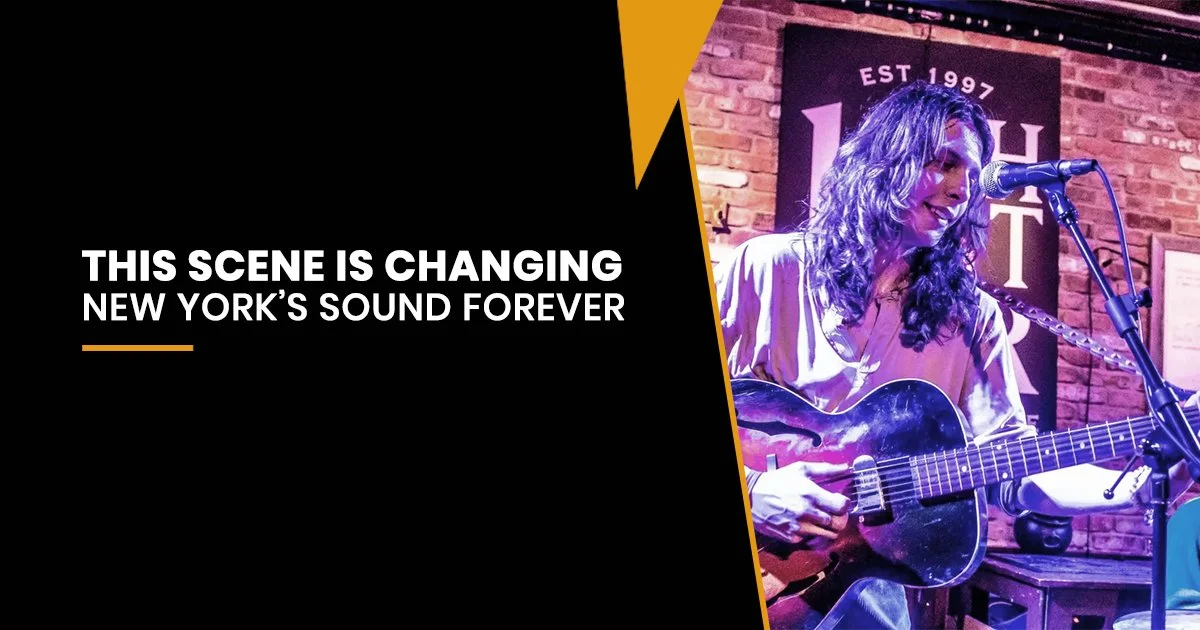
New York has always been a city that swallows genres whole and spits them back out changed.
Punk came here and became something stranger. Hip-hop came here and became an industry. And Americana — real, rootsy, story-driven music — came here, got smashed against concrete and neon and the specific texture of a Wednesday night in a bar that smells like old wood and amplifier heat, and became something that doesn't have a clean name yet.
We're calling it NYC indie folk. Some people call it urban Americana. Others say roots rock, or folk rock, or just "that thing that sounds like it was recorded somewhere honest."
Whatever you call it: in 2026, it's happening.
We're The Wonder Licks — a New York-based indie folk and Americana band built out of a Nashville education, a Brooklyn sensibility, and a rotating cast of players who believe that the best songs carry actual weight. We've been watching this scene from the inside, playing it, living in it. Here's what we're seeing.
Why Is New York Becoming a Center for Indie Folk and Roots Music Right Now?
The easy answer is that this has always been true — people just forgot.
New York gave us the Greenwich Village folk revival. It gave us the Lower East Side punk-folk crossover. It gave us Simon & Garfunkel, Lou Reed, Patti Smith — all of whom, at the core, were storytellers who cared more about a true line than a fashionable one.
What's new in 2026 is that the pendulum is swinging back.
After years of heavily produced, algorithm-optimized music, audiences — especially younger ones — are craving something that sounds like it happened in a room. Live instruments. A voice that actually belongs to someone. Lyrics that mean something specific rather than something vague enough to fit anyone.
New York indie folk is the answer to that craving in the most densely creative city in the world.
The city's DIY venues — Mercury Lounge, Rockwood Music Hall, Pianos, Baby's All Right, Bowery Electric — have always hosted this music. What's changed is the appetite. Shows that would have drawn 60 people two years ago are drawing 200. The crossover audience is growing: people who came for the indie rock are staying for the folk; people who came for the Americana are discovering the energy of the city's roots rock scene and not leaving.
We wrote about where to hear Americana live in NYC right now if you want the specific venues and nights. But the bigger point is this: the geography is expanding. It's not just Brooklyn or the Village anymore. It's everywhere.
What Does "Indie Folk" Actually Mean in New York in 2026 — and How Is It Different From Americana?
These terms get used interchangeably, and they're related but not identical.
Americana is rooted in specific traditions — country, blues, bluegrass, gospel, folk. It's a genre with a lineage and an awards category and a devoted community of listeners who know exactly what they want from it.
Indie folk is less defined by where it came from and more defined by how it sounds and who makes it. It's made by independent artists, usually in smaller venues and studios, and it tends to blend those Americana roots with elements from rock, pop, and whatever else is living in the artist's record collection. The "folk" in indie folk is more about approach — acoustic instruments, real lyrics, a refusal to sand everything smooth — than about strict genre compliance.
In New York, the two traditions collide constantly. You'll find bands whose sound lives directly in the intersection: rooted enough to satisfy the Americana listener, electric and weird enough to interest the indie rock crowd, emotionally direct enough to make both groups feel like the song was written for them specifically.
That's where we live. Our influences — My Morning Jacket, Wilco, Kate Bush, Bowie — don't fit neatly into any box. Neither does our music. Critics have called it "folky new wave" and "like cartwheeling through the woods," which we appreciate as descriptions of something that genuinely resists categorization.
This is also why we've written about what Americana music actually is and where it came from — because understanding the tradition is part of knowing why departing from it intelligently is interesting.
Who Are the Artists Shaping the NYC Indie Folk and Roots Rock Scene Right Now?
The names that come up when you spend time in the city's independent music venues are changing.
Big Thief redefined what a Brooklyn folk band could sound like — raw and experimental while still being deeply rooted. They established that "indie folk" didn't have to mean acoustic guitar and quiet. It could mean full-band noise that somehow still felt intimate.
Adrianne Lenker (Lenker's solo work, adjacent to Big Thief) has made introspective songwriting feel genuinely urgent again — a reminder that a voice and a few chords can hold more tension than any production budget.
Vampire Weekend — not typically filed under folk — brought a world-spanning intellectual energy to New York indie that influenced everything that followed, including the willingness to throw unexpected references into a rock song without apology.
And then there's the broader roots rock contingent: bands drawing from the Wilco school of Americana-meets-experimentation, the Jayhawks tradition of melody-driven country-rock, the Gram Parsons-to-Ryan-Adams lineage of songs that hurt in the right ways.
This is the water the NYC indie folk scene is swimming in right now. It's genuinely diverse, genuinely alive, and genuinely harder to categorize than it's been in years — which is exactly what makes it interesting.
Our new LP Simping for Big Toilet, produced by John Jackson (who has worked with The Kinks, The Jayhawks, Caleb Caudle, and Trapper Schoepp), comes directly out of this moment in the scene. We wanted to make a record that could only have been made by people who had been living inside it.
What Makes a Great Indie Folk or Roots Rock Song — and Why Does It Still Matter?
There's a question worth asking directly: in an era of infinite music, why does folk-rooted songwriting persist?
The answer is that certain things don't get old.
A song that tells the truth about a specific human experience — a real moment, a real feeling, a real observation — connects differently than a song designed to be appealing in the abstract. The listener knows the difference, even if they can't always articulate it.
Roots music — whether you call it Americana, indie folk, folk rock, or something else — is built on that principle. The Carter Family. Woody Guthrie. Bob Dylan. Lucinda Williams. Gillian Welch. The through-line isn't genre. It's honesty about experience. It's the willingness to be specific when vague would be safer.
In New York in 2026, that principle is being applied to the full range of what urban life feels and sounds like. The songs coming out of this scene aren't country-nostalgic. They're not pretending to be from somewhere they're not. They're written by people who live in the same cramped apartments and crowded subways and complicated relationships as the people who listen to them — and who also happen to have grown up loving Wilco records and Tom Petty songs and Gillian Welch albums and all the music that taught them how stories work.
That specificity is what makes this moment feel different. It's not a revival. It's a continuation.
We talked about the best Americana songs of all time across four posts — partly because the tradition matters, and partly because understanding what made those songs work is the only way to make new ones that belong in the same conversation.
What Does the Wonder Licks' Sound Sound Like — and Where Does It Fit?
Honest question. Here's an honest answer.
We came up on classic radio and classical piano (Jacob's origin story), which means melody is never an afterthought. We came up on psych-rock and experimental indie (the Vega Maestro years), which means we're not afraid of strange choices. We came up on Americana and roots music (Nashville, Belmont, the whole education), which means the songs have structure and stakes.
The result is something that gets described differently depending on who's describing it. "Folky new wave." "Imaginative and new without a twinge of replication." "Like cartwheeling through the woods." We've also been called a futuristic Americana band, which we like because it suggests we're looking forward rather than backward — using tradition as a foundation rather than a ceiling.
If you love Big Thief, Wilco, My Morning Jacket, or the more experimental end of the Americana spectrum — you'll probably find something here. If you came to folk music through indie rock and never fully left — you'll probably find something here. If you've been looking for a band that sounds like it actually believes in what it's doing — you'll definitely find something here.
Our music page has everything worth hearing, including the live studio album Life at 7 kHz, which captures what we sound like when a room full of people is listening and something real is happening.
What's Coming Next for The Wonder Licks and NYC's Indie Folk Scene?
We're watching the same trends everyone in the scene is watching.
Live music is returning as a primary cultural experience — not just an add-on to a streaming relationship, but the thing itself. Audiences in 2026 want to be in a room with something real. That's good for bands like ours and for the venues that have sustained this music through the lean years.
The Grammy spotlight on Americana — Jon Batiste's Big Money winning Best Americana Album in February 2026 — continues to expand what the genre means to mainstream audiences. We wrote about what that moment represented in our post on the new Americana albums you should be streaming in 2026. The short version: Americana is larger and stranger than it's ever been, and that's good news for everyone making music in its general direction.
For us specifically: new music is coming. Shows are being booked. The record is finished. We're playing New York and beyond — check our tour page for where we'll be next.
If you've been meaning to catch us live — now is the right time.
FAQ: NYC Indie Folk Music and The Wonder Licks
What is indie folk music?
Indie folk is a broad term for independent music that blends folk songwriting traditions — acoustic instruments, storytelling lyrics, melodic emphasis — with influences from indie rock, pop, and alternative music. It's less defined by strict genre rules than by approach: honest, intimate, rooted in real experience, and made outside the mainstream commercial system.
How is indie folk different from Americana?
Americana is rooted in specific American musical traditions — country, blues, bluegrass, gospel, and folk. Indie folk is looser and draws from a wider range of influences, including international music, rock, and pop. Many artists and bands live in the overlap between the two, especially in New York where the indie rock and Americana communities share venues and audiences.
What makes New York's indie folk and roots rock scene unique?
New York's version of folk-rooted music tends to be more eclectic and experimental than scenes in Nashville or other Southern cities. It's shaped by the city's density of influences — jazz, hip-hop, punk, classical, world music — and by an artistic culture that values strangeness alongside authenticity. NYC indie folk sounds like it was made by people who grew up listening to everything.
What bands are part of the NYC indie folk and roots rock scene?
Big Thief, Adrianne Lenker, Beirut, and others have defined the sound from Brooklyn. The Wonder Licks occupy a specific corner of this scene — rooted in Americana traditions but influenced by Wilco, My Morning Jacket, Bowie, and Kate Bush in ways that push the sound into more eclectic territory. Critics have called their approach "futuristic Americana" and "folky new wave."
Where can I hear The Wonder Licks live in NYC?
Check our tour page for current dates and venues across New York City and the surrounding area. We play regularly in Manhattan and Brooklyn, with dates announced several weeks in advance.
What does The Wonder Licks sound like?
We've been described as "folky new wave" and "imaginative and new without a twinge of replication." Our influences include My Morning Jacket, Wilco, David Bowie, and Kate Bush — which should tell you something about the range. We're an Americana band that doesn't stay inside Americana's borders. Hear it for yourself on our music page.
How do I follow The Wonder Licks and stay updated on new music?
The best way is our mailing list — you'll get new tracks, early ticket access, and behind-the-scenes updates before they hit social media. You can sign up on our about page. We're also on Instagram and Facebook — find us at The Wonder Licks on all major platforms.
Come Find Us
We're playing. We're recording. We're part of something that's genuinely alive in New York City right now.
If you've been sleeping on the city's indie folk and roots rock scene — wake up. And if you want to hear what it sounds like when Americana meets something more restless and strange, start with us.
Listen to our music →
See where we're playing →
Get on the list →
The Wonder Licks — NYC. Futuristic Americana. The best music you've never heard.