How to Find New Americana Music Worth Your Time — An Insider's Guide
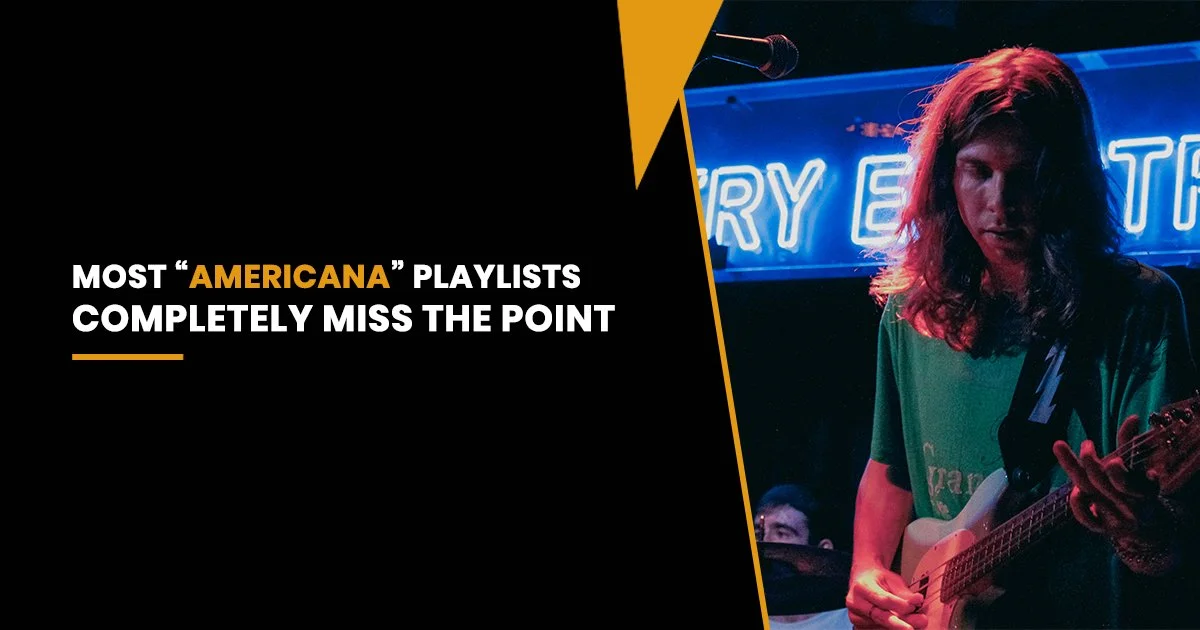
Most music recommendation algorithms have no idea what Americana actually is.
They'll serve you a playlist labeled "Americana" that contains three legitimate roots artists, two pop-country acts with acoustic guitars, and a singer-songwriter who heard "fast car" once and decided that was enough. Streaming services optimize for engagement, not for the specific thing that makes Americana worth seeking out — which is emotional honesty, storytelling craft, and the feeling that whoever made this actually lived inside it.
We're The Wonder Licks. We're a New York-based Americana band and we've been inside this scene for years — playing it, listening to it obsessively, watching who comes up and who stays. We discover new music constantly because it's part of how we think about what we're making and where it lives.
This is how we actually do it. Not a productivity system. Not a spreadsheet. Just the honest sources and signals that consistently surface the real thing.
Why Is It So Hard to Find New Americana Through Normal Channels?
Direct answer: Because Americana is a values-based genre rather than a sound-based one — and recommendation algorithms are built around sonic similarity, not the emotional and craft values that define what Americana actually is.
Spotify's algorithm identifies Americana largely by instrumentation and tempo. Acoustic guitar. Moderate tempo. Certain chord structures. That description also fits a lot of music that has nothing to do with what makes Americana meaningful.
What the algorithm can't detect: whether the lyric is genuinely specific or generically universal. Whether the voice sounds earned or performed. Whether the song sits with difficulty or resolves it too quickly. Whether something real happened here.
These are the qualities that separate a great Americana record from a polished imitation of one — and they're invisible to any automated system. Which means the best sources for discovering real Americana are still human ones.
Genre definitions matter here too. If you want to understand what actually separates Americana from adjacent styles before you start looking, our guide to what Americana music actually is covers the full picture — the history, the values, the specific qualities that make something Americana rather than country or folk or roots rock.
The short version: you're looking for emotional truth over polish, specific storytelling over universal sentiment, and the feeling that the person singing has lived what they're describing. Once you know what you're listening for, finding it gets easier.
Where Do Working Americana Artists Actually Discover New Music?
Direct answer: From other musicians, independent publications, specific radio programs, live shows, and a handful of streaming playlists curated by people who deeply understand the genre — not from algorithmic recommendations.
This is the honest answer, and it sounds obvious until you realize how rarely people actually do it systematically.
Other musicians. This is the single most reliable source and the most underused by people outside the industry. When an artist you trust covers someone, or mentions someone in an interview, or opens their show with someone else's song as a sound check — that's a signal worth following. Artists curate with taste rather than data. When Gillian Welch praises a songwriter, that recommendation carries more information than any playlist. When Jason Isbell shares something on social media, it's worth five minutes of your attention.
For us specifically: watching who our musical contemporaries in the NYC indie folk and roots scene are listening to has led us to more genuinely great music than any other single source. The local scene is small enough that word travels fast and curated enough that bad tips don't last. We wrote about what's happening in New York's indie folk scene right now — the artists in that piece are the ones worth tracking.
No Depression. If you follow one publication for Americana, make it this one. No Depression has been the genre's most serious critical home since the 1990s. Their coverage runs deep — they write about artists well before mainstream music press notices them, and their writers understand the genre's values rather than just its aesthetics. The weekly newsletter is worth subscribing to.
American Songwriter. More accessible than No Depression and broader in scope, but consistently good at identifying emerging Americana artists in the singer-songwriter and Americana space. Their "Song Premiere" feature regularly introduces artists before they have meaningful streaming numbers.
Folk Alley and Radio Free Americana. Internet radio done right. Both platforms curate specifically for quality rather than popularity, and both regularly feature artists years before they reach mainstream visibility. The shows are hosted by people who know the genre's history — which means what gets played is contextually chosen, not algorithmically served.
AmericanaFest in Nashville. The genre's annual gathering is genuinely the best single source for seeing what's emerging before it emerges anywhere else. The conference showcases hundreds of artists across dozens of venues, and the side stages — not the headliners — are where the discovery happens. If you can't attend in person, the coverage from No Depression and other outlets immediately afterward maps out who broke through.
What Signals Tell You an Emerging Artist Is the Real Thing?
Direct answer: Lyrical specificity, a distinct voice that sounds like no one else, the ability to sit with difficulty without resolving it too quickly, and the sense that the songs existed before they were performed rather than being constructed for performance.
This is the harder question and the more useful one. Knowing where to look gets you to a lot of music. Knowing what to listen for is what separates the discoveries that last from the ones that fade.
The specificity test. Does this lyric contain details that could only have come from a real, specific experience? A street name, a particular time of day, a physical object that carries emotional weight, a named person doing something specific? Or does it contain placeholders — "you left me," "I miss you," "the road goes on forever" — that could fit anyone's experience and therefore fit no one's deeply?
The artists who last in Americana are almost always the ones who write with extreme specificity. John Prine named the cigarettes, named the disease, named the nursing home. Jason Isbell names the specific highway, the specific bottle, the specific night. Tyler Childers names the county, the neighbor, the fence line. That precision is evidence of truth, and truth is what the genre runs on.
The voice test. Does this artist sound like they couldn't sound like anything else? Or do they sound like a competent version of someone already established? There's enormous value in the Americana tradition — deep respect for the lineage matters — but the artists who contribute something new always have a quality that feels particular to them rather than derived from their influences.
When we first heard Big Thief, the specificity of Adrianne Lenker's perspective and the strangeness of the band's sonic choices were unmistakable evidence that something genuinely new was happening. That combination — the traditional values of Americana storytelling with a sonic identity that couldn't be confused with anything preceding it — is the clearest signal that an emerging Americana artist has a real future.
The difficulty test. Does the song sit with something hard, or does it resolve too quickly? The Americana tradition has deep respect for songs that don't explain themselves, that end without tidy conclusions, that ask the listener to sit with ambiguity. A song that names a difficult emotion and then immediately offers comfort or resolution has cheated. A song that names the difficulty and stays there — that trusts the listener to hold it — is working at the genre's highest level.
We've written about exactly this craft in detail — the specific techniques that separate Americana songs that last from ones that don't — in our piece on what makes a great Americana song. Reading that alongside listening to emerging artists gives you a sharper critical ear for what you're actually evaluating.
How Do You Use Live Shows to Discover Americana Artists Before Everyone Else?
Direct answer: Arrive early enough to see the opening act, pay attention to who's playing small venues and side stages at festivals, and follow the openers home — the artists opening for established Americana acts are almost always the ones worth knowing about.
Live music remains the genre's primary ecosystem and its most reliable Americana music discovery mechanism. The Americana audience built around live performance first, recorded music second — which means the scene's tastemakers and gatekeepers are still concentrated in the live circuit rather than in streaming metrics.
The opener principle. When a headliner you trust is touring, their opener was chosen deliberately. Not randomly and not primarily for commercial reasons — Americana tours tend to build lineups by aesthetic and community affiliation. An artist who opens for Isbell, or Margo Price, or Courtney Marie Andrews was put there because someone in that world believes in them. That implicit endorsement is worth following.
See the whole show. The openers who play to half-empty rooms at 7:30pm in Americana venues are often the artists who will be headlining three years later. We've watched this happen repeatedly from the inside. The New York venues we've played — Rockwood Music Hall, Mercury Lounge, Baby's All Right — run on this economy. The person on stage at 7:30 on a Tuesday is often where the real discovery happens.
Festival side stages. AmericanaFest's main showcases are for established artists. The side stages — the ones in smaller rooms, the ones that don't make the main program — are the discovery ground. Every major Americana career of the last decade had a side stage period at AmericanaFest or a similar festival. If you're attending and you want to find what's actually emerging, spend at least as much time on the side stages as on the main ones.
Bandsintown and Songkick are both useful for tracking when artists you're following are touring near you, and both will surface related artists when you look at a show. They're imperfect discovery tools but they're better than most streaming algorithms for this purpose because they're built around the live ecosystem rather than passive listening data.
Our tour page stays updated as we add shows — if you're in New York or the surrounding area, coming to a Wonder Licks show puts you in a room with an audience that cares about this music and talks about it. That conversation after the show is its own discovery mechanism.
Which Streaming Playlists Actually Surface Real Americana?
Direct answer: Playlists curated by known Americana critics, publications, or artists consistently outperform algorithmically generated ones — the key is finding playlists where a human being with deep genre knowledge made every selection.
This doesn't mean avoid streaming platforms. It means use them differently.
Search for playlists by people rather than platforms. Spotify's editorial playlists titled "Americana" or "Roots Revival" are fine starting points but they're broad and commercially influenced. Playlists made by No Depression writers, by Americana radio DJs, by respected artists in the genre — these are more reliable because the curator has a specific sensibility rather than an audience-size mandate.
Follow artists whose taste you trust. Most streaming platforms let you see what artists are listening to or what they've publicly saved. When an Americana artist whose judgment you respect adds something to a public playlist, that's a curation signal worth acting on.
The "inspired by" and "fans also like" functions on streaming platforms are genuinely useful for Americana music discovery — more so than for most genres — because the audience overlap is real and meaningful. If you love Wilco and want to find something new, the artists who Wilco fans consistently also follow include a meaningful percentage of serious Americana artists. The same is true for My Morning Jacket, Big Thief, Jason Isbell. Starting from an artist you trust and following the overlap outward surfaces real connections rather than sonic coincidences.
Our list of the 25 Americana albums every fan needs to hear gives you a foundation listening list — every artist on that list is a valid starting point for the "fans also like" approach, and the breadth of that list means you can find your own entry point into the network.
How Do You Know When You've Actually Found Something Worth Your Continued Attention?
Direct answer: You return to it without deciding to. The song comes back to you when you're not listening to music — in a car, in a queue, on a walk — and you find yourself seeking it out rather than encountering it.
This is the most honest metric and the one that algorithms can't fake.
Most music gets one listen and moves on. That's not a failure of the music or the listener — it's just the reality of abundance. The question isn't whether a first listen produces a strong reaction. It's whether the second listen reveals something the first one didn't. And whether the fifth listen is still doing that.
Great Americana songs — the ones that earn a place in someone's life rather than their queue — consistently work this way. They're built with enough depth and specificity that the layers don't reveal themselves all at once. Returning to them produces discovery rather than confirmation.
The 100 Best Americana Songs series we published is built around exactly this principle — these are songs that reward return listening, that get deeper rather than more familiar. Running a new discovery through that same test — does this deepen? — is the most reliable filter we know.
When you find an emerging Americana artist whose songs do this, follow them immediately and closely. An artist who writes at that level early in their career is almost always building toward something. Getting in early is one of the particular pleasures this genre offers — seeing an artist develop from small venues to larger ones, from rough early recordings to fully realized albums, having been there from the beginning.
FAQ: Finding New Americana Music
Where is the best place to discover emerging Americana artists online?
No Depression remains the most reliable single source for serious Americana music discovery online. Their coverage identifies artists before mainstream visibility and their critics understand the genre's values rather than just its aesthetics. American Songwriter, Folk Alley's website, and the Bandcamp Americana section are also consistently strong. For social discovery, following established Americana artists on Instagram and seeing who they reference, cover, or open their shows tends to surface genuine recommendations faster than any algorithm.
How do I tell the difference between real Americana and pop-country marketed as Americana?
Listen for lyrical specificity — real Americana tends toward concrete, particular details rather than universal sentiments. Listen for whether the voice sounds earned or performed. Listen for whether the song sits with difficulty or resolves it quickly. Pop-country marketed as Americana tends to use acoustic instrumentation, reference rural imagery, and maintain polished production over emotional roughness. Real Americana tends to prioritize truth over sound, even when that means the recording isn't pristine.
What is AmericanaFest and how useful is it for discovering new artists?
AmericanaFest is the Americana Music Association's annual conference and festival held in Nashville each September. It's the most concentrated single event for the genre — hundreds of artists performing across dozens of venues over four or five days. For discovery purposes, the side stages and smaller showcase venues at AmericanaFest are more valuable than the main stages, which feature already-established artists. Most serious Americana artists played the conference's smaller rooms before they were known — attending in that capacity is one of the best ways to find new Americana music that's genuinely emerging.
How often should I check in on new Americana releases to stay current?
The genre's release calendar is less front-loaded than pop — albums arrive throughout the year rather than clustering around certain release windows. A weekly check of No Depression and American Songwriter, combined with a monthly look at Americana airplay charts, covers the meaningful new releases without becoming a second job. The more important habit is following a small number of trusted human curators rather than trying to monitor the full release landscape, which is genuinely impossible.
Which streaming playlists are worth following for Americana discovery?
Curated playlists from publications and critics outperform platform-generated ones significantly. Search Spotify and Apple Music for playlists associated with No Depression, Folk Alley, and American Songwriter. Playlists created by established Americana artists are also reliable — when someone like Jason Isbell or Brandi Carlile makes something public, it reflects genuine taste. Avoid relying primarily on platform-generated playlists with names like "Americana Rising" — they're too commercially influenced to consistently surface the real thing.
Can I trust Spotify's Americana recommendations?
Partially. The "fans also like" and "inspired by" functions produce useful leads because the audience overlap between Americana artists is meaningful — if you love Wilco, the artists Wilco fans also love include a real proportion of serious Americana artists. The editorial and algorithmically generated playlists are less reliable because they're optimized for broad engagement rather than genre depth. Use Spotify for following up on leads from trusted human sources rather than as a primary Americana music discovery mechanism.
Start Here
The Americana scene is always producing something worth finding. The barrier isn't availability — there's more good music being made right now than any single listener can absorb. The barrier is filtering.
The sources above consistently surface the real thing because they're run by people who understand what they're looking for. That understanding — of the genre's values, its history, its specific standards — is what separates a great Americana recommendation from a sonic coincidence.
If you're new to the genre and want a foundation before you start exploring emerging Americana artists, our what is Americana music guide is the honest starting point. If you already know the tradition and want to understand the craft that separates the lasting records from the passing ones, what makes a great Americana song sharpens the ear you bring to everything you find.
We're a New York Americana band actively making this music. Our music page has everything we've released, and our tour page has where we're playing. If you're in New York — or wherever we are — come find us.
The best music you've never heard is out there right now. You just need the right map.